
A Kitchen You Can Cook In,
Zoned, Labelled and Reachable,
Across Rochford & Essex Homes.
Every cupboard emptied, wiped and refilled by task zone. Everyday items at hand height. Pantry decanted only where it genuinely helps, so you cook faster, waste less and stop rebuying things you already own.
- Zoned by task, not by cupboard
- Everyday items at hand height
- APDO accredited
- Free 30-min discovery call
What you're actually booking,
and what it's for.
- What it is
- Kitchen and pantry organisation is a full reset of the room. Cupboards are emptied and cleaned, contents are edited and consolidated, and everything is reorganised into task-based zones. Where decanting genuinely helps visibility, it's done properly; where it doesn't, packaging is kept.
- Who it's for
- It's for anyone whose kitchen has stopped functioning: cupboards you can't close, spice drawers you dread, a pantry you avoid, or a fridge that resets to full every Sunday. Also invaluable in a newly refitted kitchen where the fitters filled cupboards randomly.
- When to book
- Best done at seasonal reset, after a house move, after a kitchen refit, before or after a new baby, or when the weekly food shop starts feeling like it just replaces what got wasted last week.
- Why professional help matters
- A properly organised kitchen cuts cooking time, dramatically reduces food waste, and quietly saves money by making duplicates and expiring items obvious. It also stops the kitchen from being the reason weekday dinner turns into a takeaway.
A closer look at
what actually happens on the day.
'Kitchen organising' can mean many things. Here's specifically what I do inside an Essex kitchen or pantry.
Zones by Task
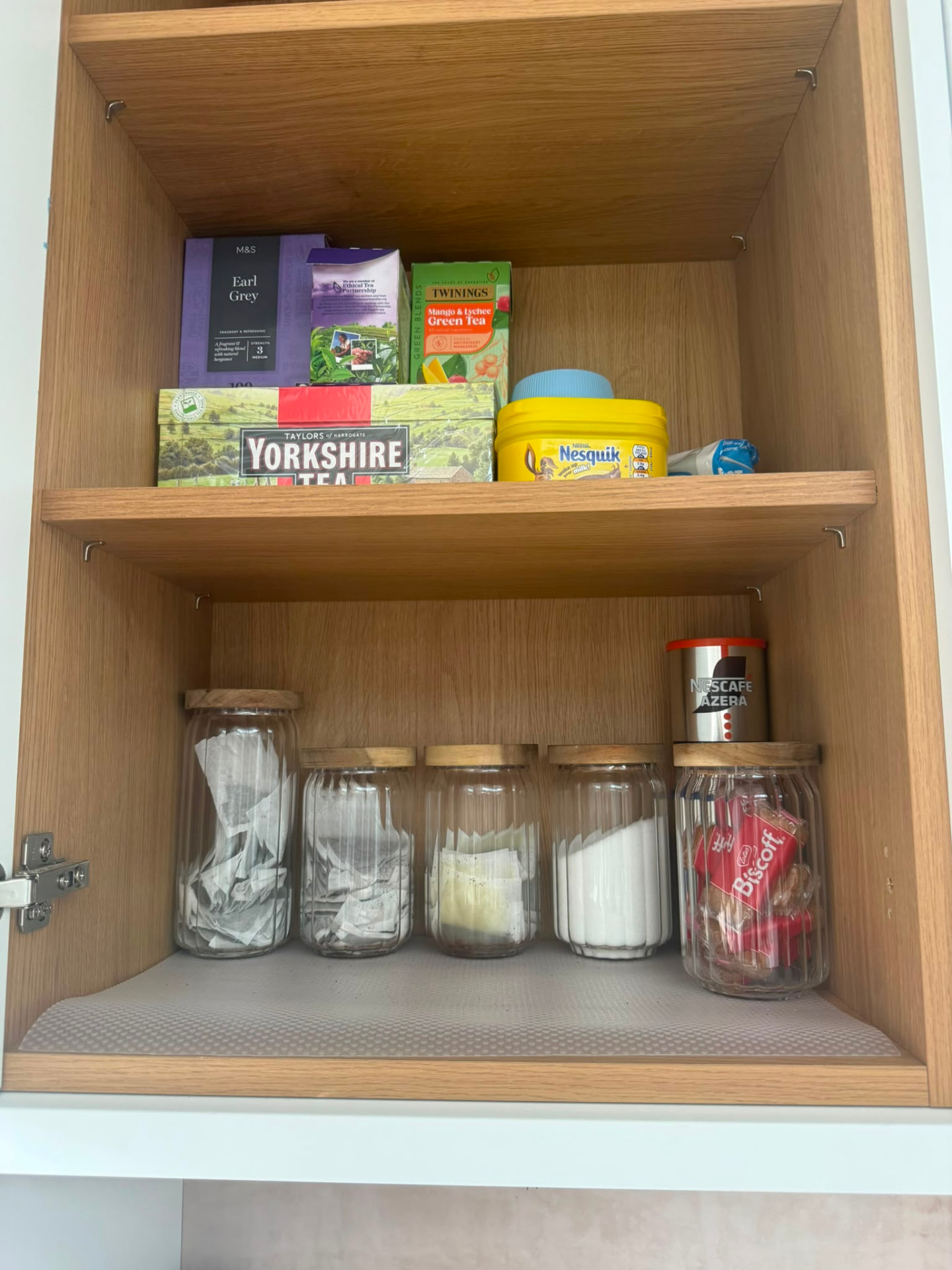
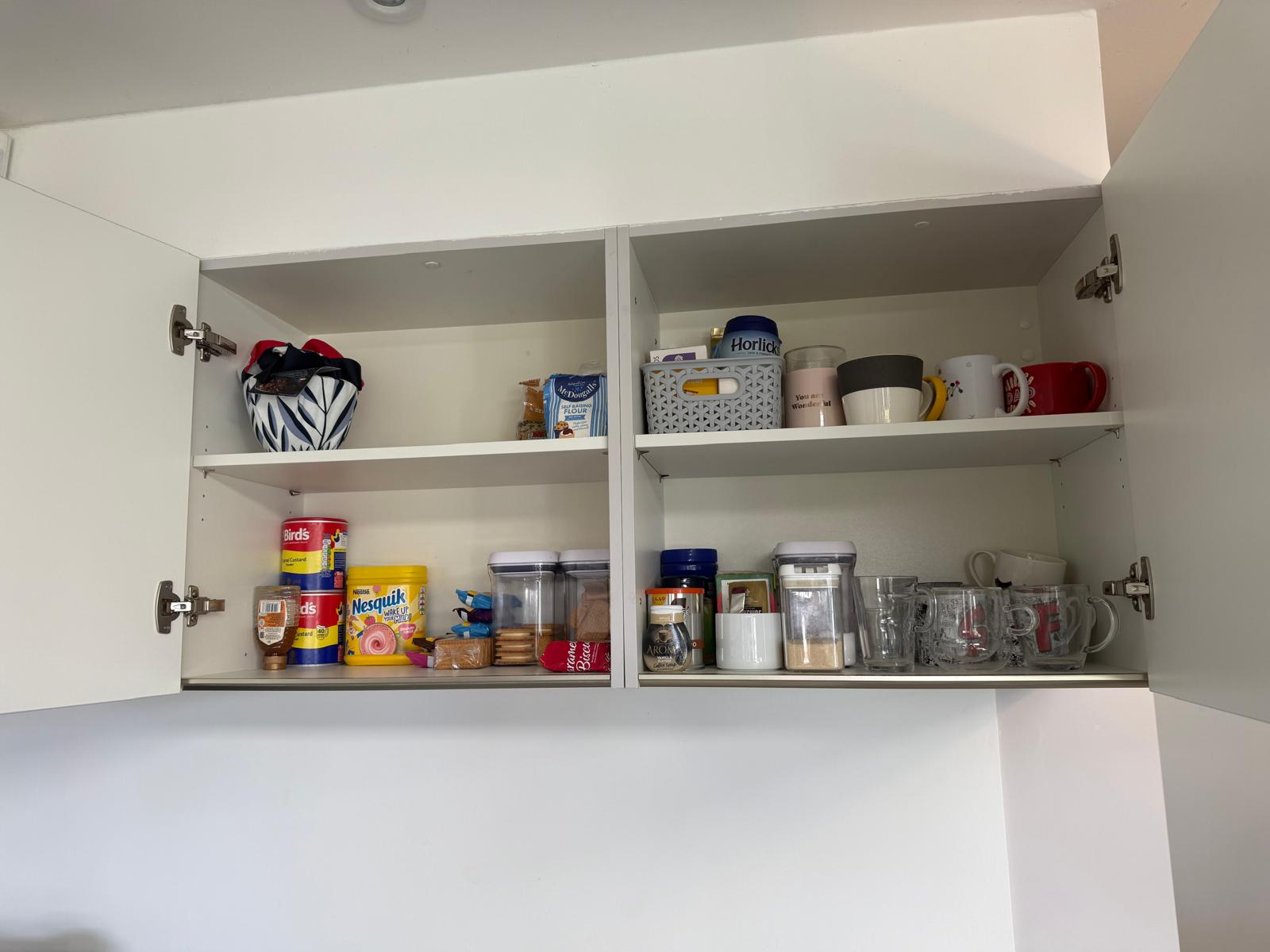
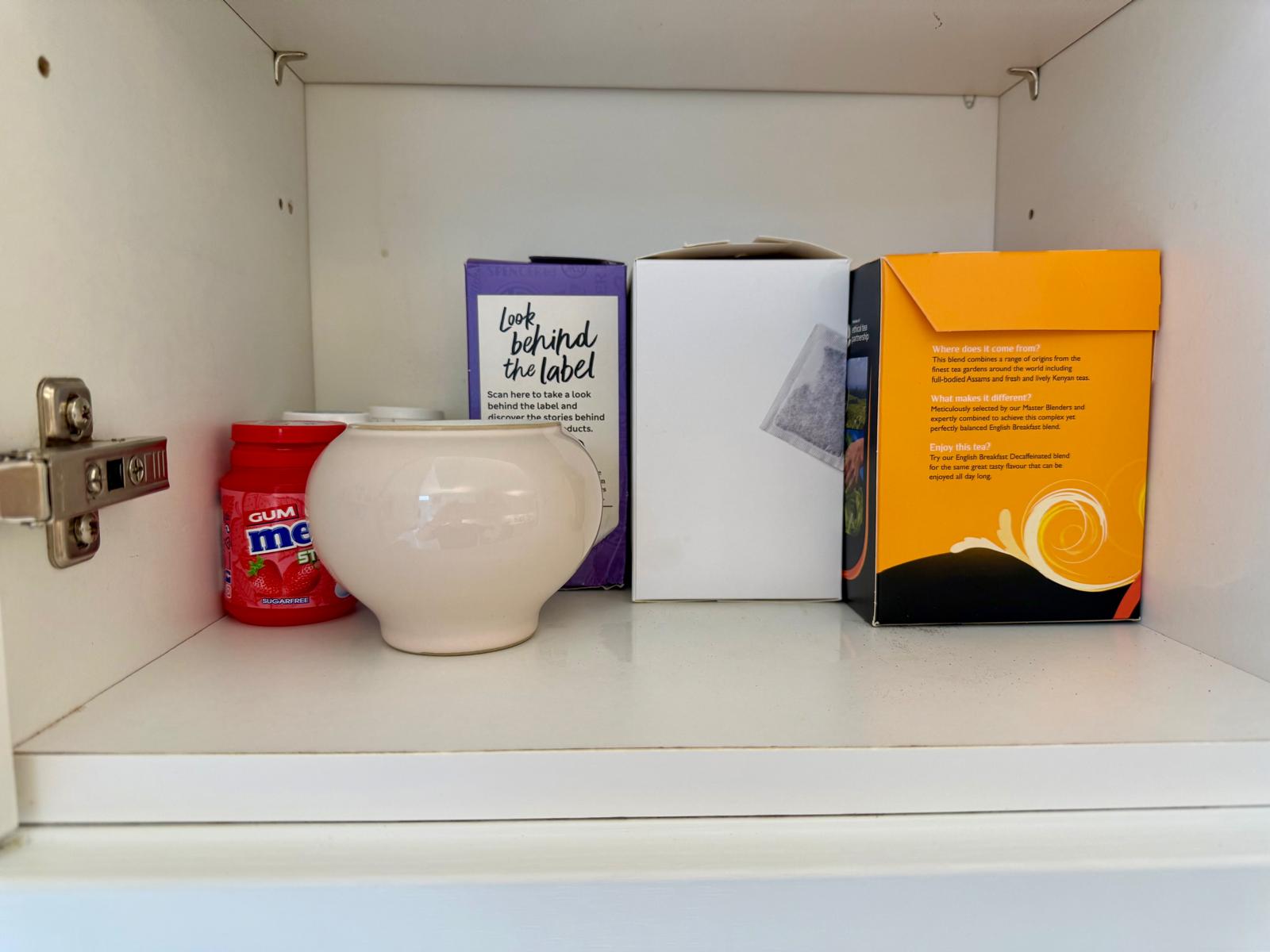
Prep zone (knives, boards, prep bowls) near the main worktop. Cook zone (pans, utensils, oils, salt, pepper) next to the hob. Serve zone (plates, bowls, cutlery) between hob and table. Hot drinks zone (kettle, mugs, tea, coffee) near the kettle. Kids' snack zone at child height.
Everyday vs Occasion
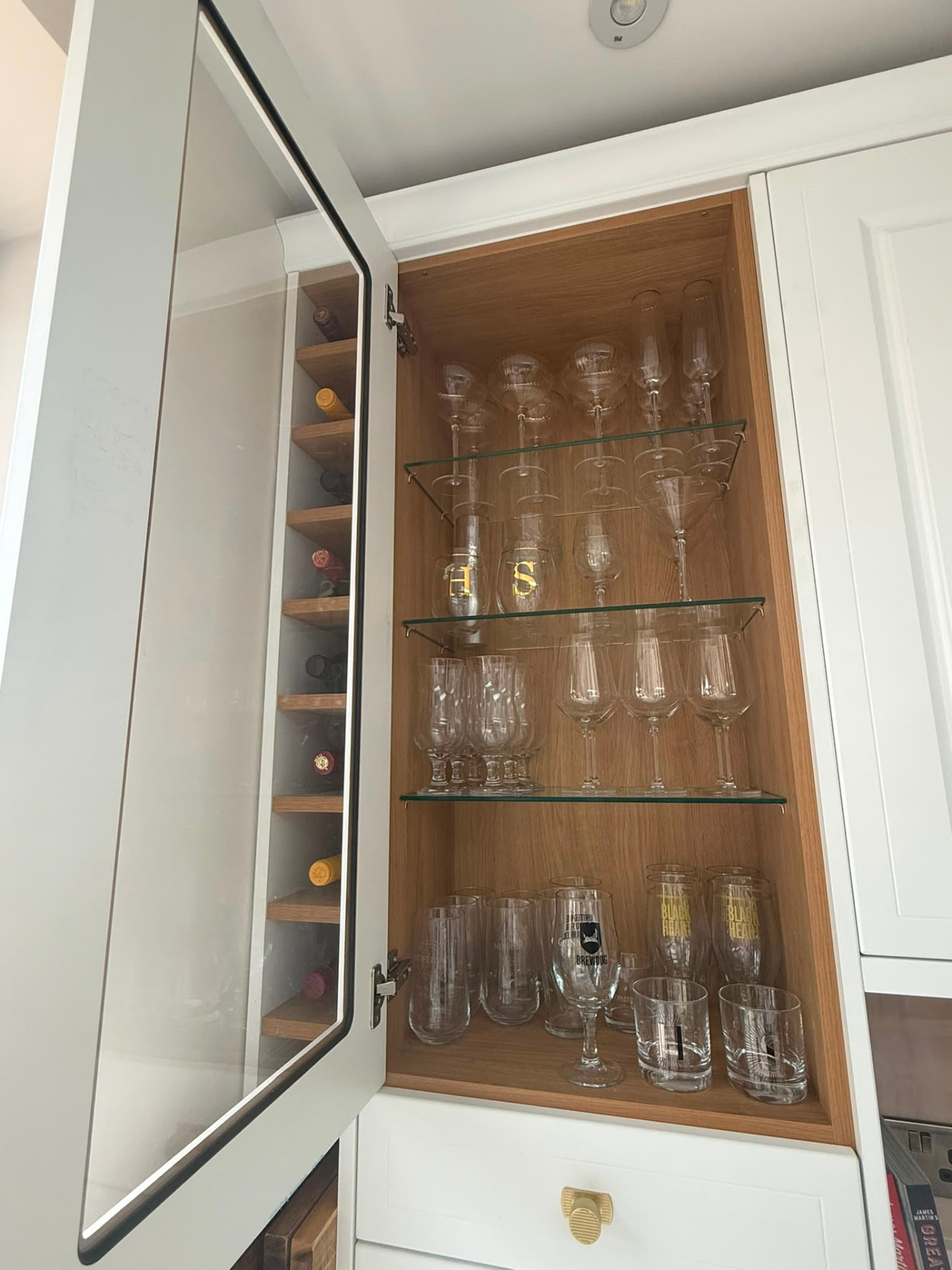
Everything you use weekly lives at hand height. Occasion items (fondue set, cake stand, roasting tins used twice a year) move up, back or to a nearby storage cupboard.
Decanting: Only Where It Earns Its Place
Cereals, pasta, rice, flour and sugar decant well and improve visibility. Snacks and multi-pack items usually don't, keep packaging. Airtight glass or acrylic containers are specified to fit the cupboard, not chosen for a photograph.
The Pantry
Categorised by meal type or ingredient family: baking, breakfast, dry pasta and grains, tinned goods, sauces and condiments, snacks. Labels face front. Refill points are visible so shopping lists become passive rather than a mental scramble.
The Fridge
Cleared, wiped, and zoned: dairy on the top shelf, raw meat on the coldest, ready-to-eat at eye height, drinks in the door. Leftovers get a defined shelf so they're actually eaten before they turn.
The Freezer
Categorised (proteins, ready meals, batch-cook, bread, ice) and inventoried on a simple whiteboard or door list. Freezers are usually the single most wasted storage in a British kitchen.
Small Appliances
Kept on the counter only if used at least weekly. Everything else goes to accessible cupboard storage. Cables are coiled and labelled.
Rented vs Fitted Kitchens
In rented kitchens I work with existing storage, freestanding, non-invasive solutions. In fitted kitchens I can flag which cupboards are underperforming and where a joiner or organiser insert would pay for itself.
Our Work
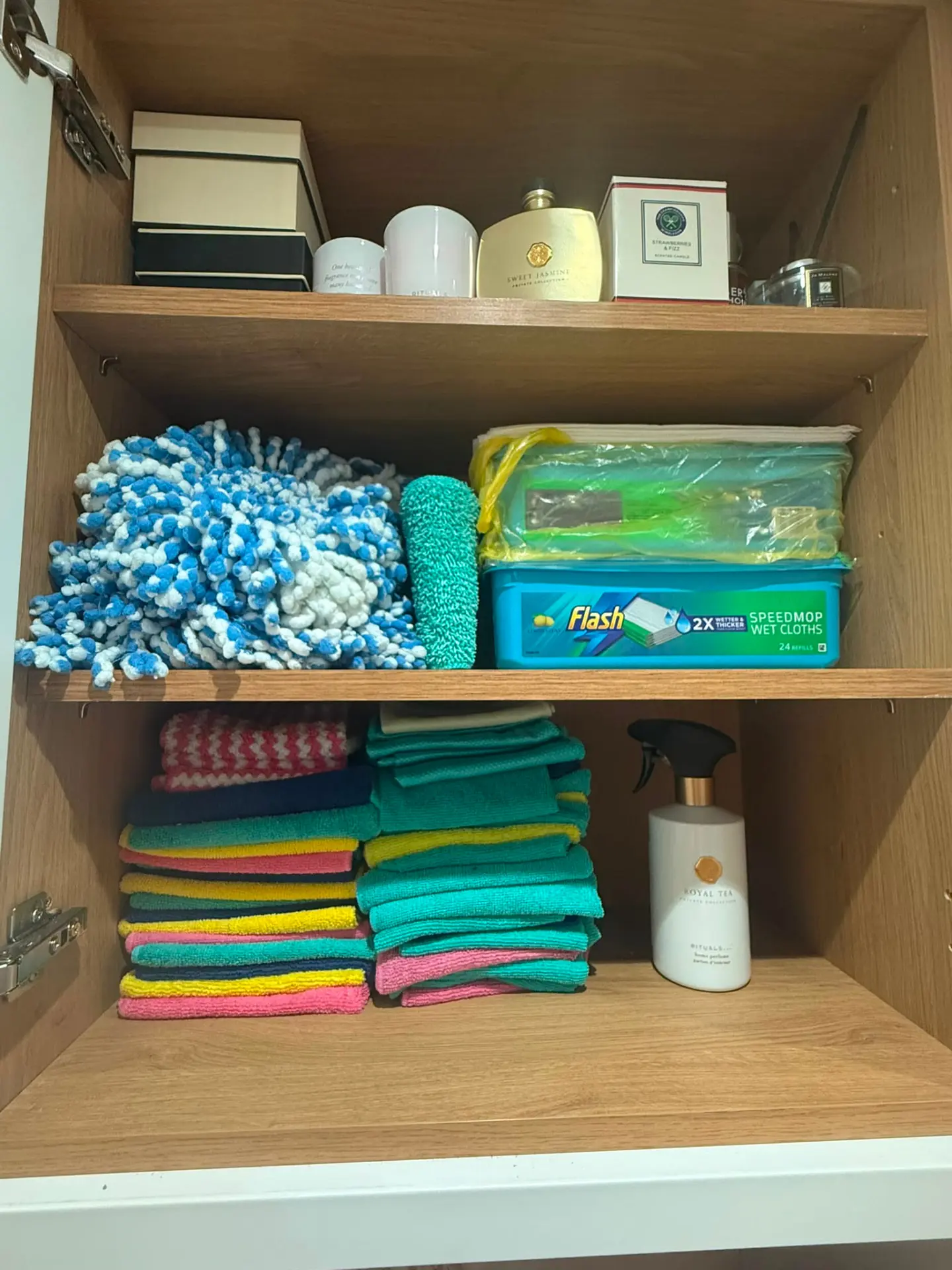
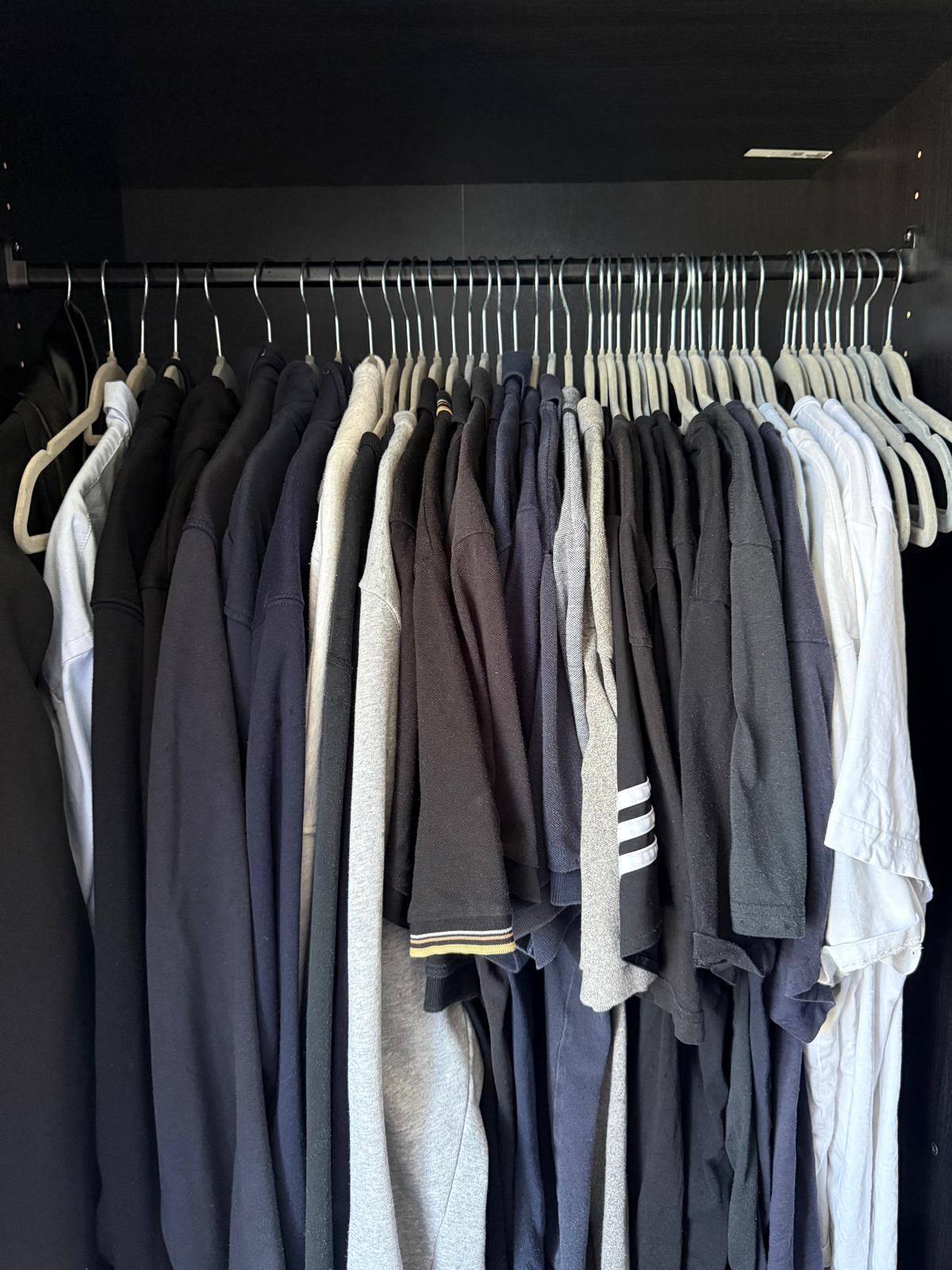
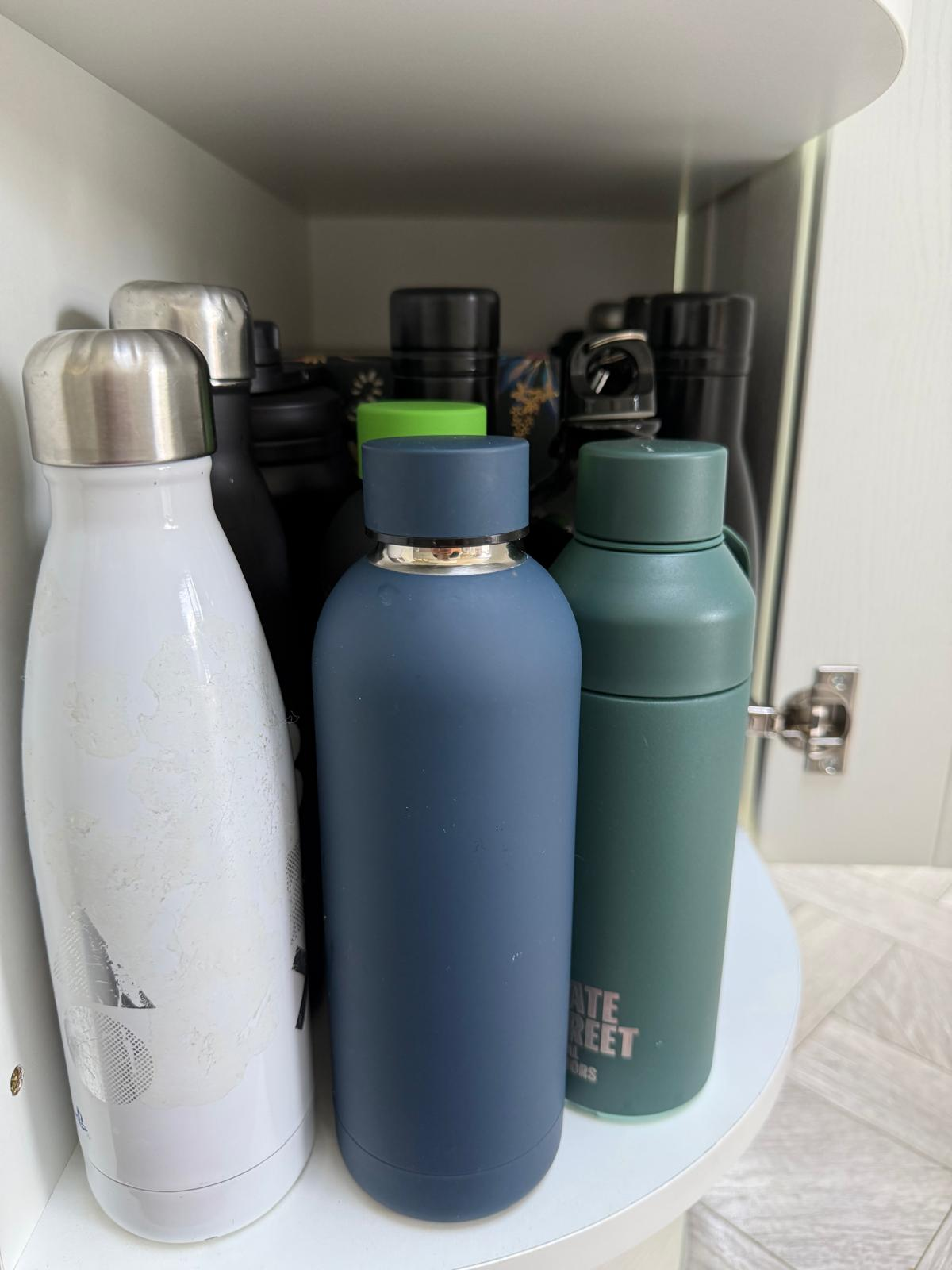
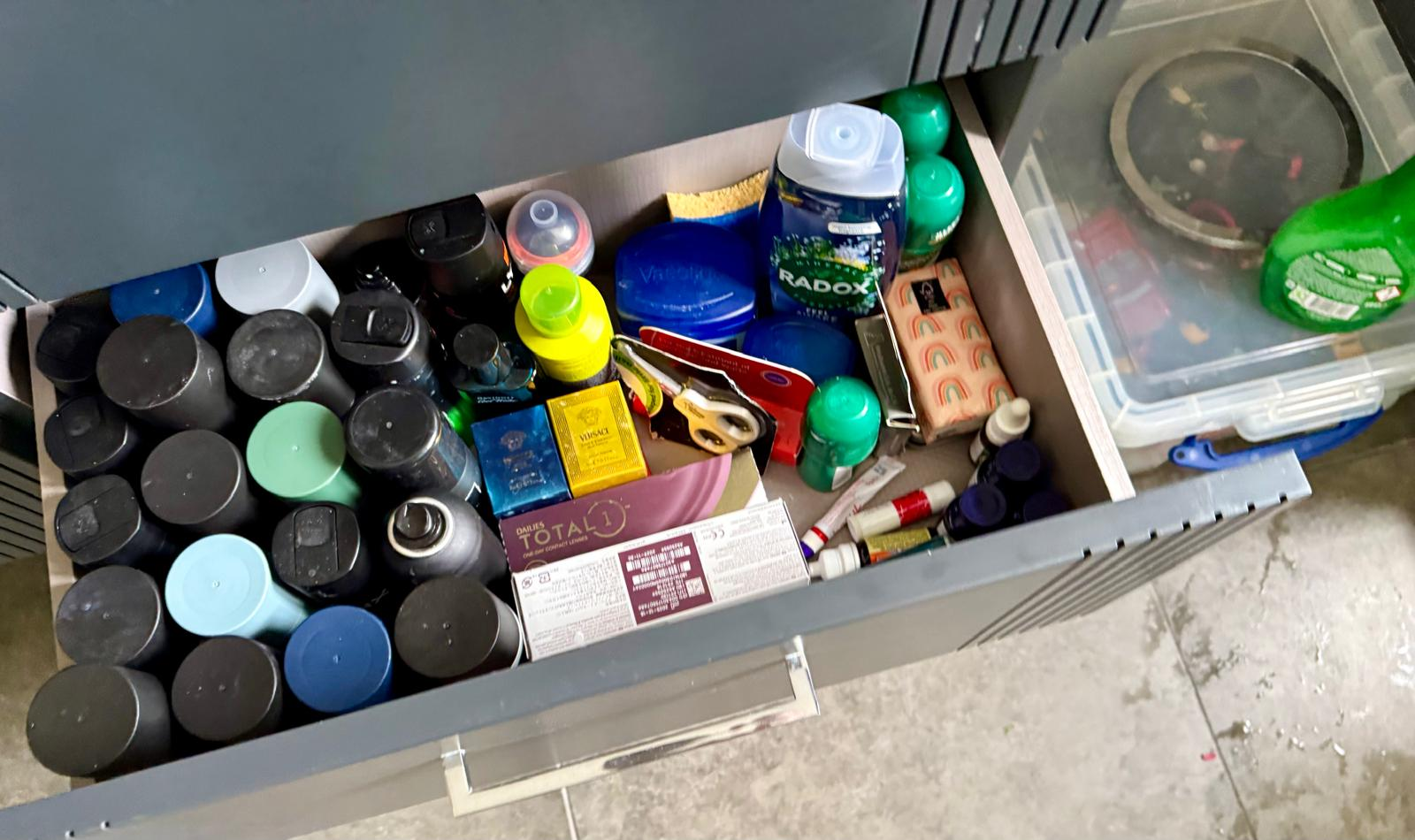
Some of our organised spaces.
Concrete outcomes,
not vague promises.
Faster Cooking
Task zoning means every action, prep, cook, plate, wash, happens in one place instead of criss-crossing the kitchen.
Less Food Waste
Visible pantry and fridge zones mean you use what you already have before buying more.
Kid-Friendly
A defined snack zone at child height stops the hourly 'can I have…' interruptions.
Cheaper Weeks
Duplicates and expiries surface immediately, cutting the weekly shop by a measurable amount.
Cleaner Kitchen
A zoned kitchen resets in 10 minutes at the end of the day rather than an hour.
Realistic Maintenance
Systems are designed around who actually cooks and how, not around the version of you on Instagram.
From first call
to systems that last.
Every project follows the same considered rhythm, so you know exactly what happens before, during and after we work together.
Start with a Free Call- 01
Free 30-Minute Discovery Call
We talk through the rooms causing the most stress, the outcome you want and any constraints, pets, small children, working from home. No pressure, no obligation, no upsell.
- 02
In-Home Walkthrough & Measure
I visit your home, measure every relevant drawer, wardrobe and cupboard, photograph the space and agree the scope in writing before any work is booked.
- 03
Plan, Sourcing & Prep
I design zones around how you actually live, source any storage inserts, hangers, labels or baskets, and confirm the day-by-day plan so you know exactly what to expect.
- 04
Hands-On Organising Day
We work alongside you throughout. Everything is sorted, categorised, edited and placed. Anything leaving the house is bagged and removed the same day.
- 05
Systems Handover & Aftercare
You get a short walkthrough of the finished space, a simple maintenance routine your household can actually keep up with, and a follow-up message a fortnight later to check nothing has drifted.
What a Broken Kitchen Actually Costs
A disorganised kitchen is one of the most expensive rooms in the house, it just hides the cost. Half-used sauces expire at the back of a cupboard. Fresh produce dies in the fridge because it wasn't visible. Kids' snacks live at adult height and get asked for hourly. Spices are duplicated because you couldn't find the ones you had. Weeknight cooking feels harder than it should, so takeaway wins two or three nights a week. Over a year, food waste alone in a disorganised UK kitchen easily runs into hundreds of pounds, before you count the takeaways caused by the kitchen simply not working.
Common Mistakes I See
- 01Decanting every dry good into pretty jars. It only helps if you actually refill them; otherwise it's a chore that fails within a fortnight.
- 02Putting everyday items above eye height because 'they look neater there'.
- 03Ignoring the fridge. A fridge audit usually surfaces two or three items past their date every visit.
- 04Refitting a kitchen without listing appliances that need permanent counter space.
The questions
most Essex clients ask.
How long does a kitchen organisation take?+
A standard family kitchen is usually a full day. A large kitchen with a separate pantry is one and a half to two days. Confirmed after the walkthrough.
Do you supply the inserts, jars and labels?+
Optionally, yes, sourced to fit the exact cupboards and confirmed in writing before we start.
Will you decant everything into matching jars?+
Only where it genuinely helps. Decanting for its own sake creates a maintenance chore that fails quickly. I'll be honest about what earns a jar and what doesn't.
Do you audit the fridge and freezer?+
Yes, both are included. Expiries are checked, categories set up, and a simple maintenance routine handed over.
What does it cost?+
Confirmed on the discovery call once I know the kitchen size and whether inserts are being sourced. Written figure before booking.
Can you help right after a kitchen refit?+
Absolutely, that's one of the best times, because you can set the room up properly from day one rather than reshuffling for a year.
Do you cover food safety and allergies?+
Yes, zones can be designed with allergen separation, child-safe storage and medicine separation where relevant. Mention this on the discovery call.
Which Essex areas do you cover?+
Rochford, Upminster, Southend, Thorpe Bay, Rayleigh, Chigwell, Colchester, Sudbury and the City of London.
Ready to see what a kitchen you can cook in
could look like in your home?
Every project starts with a free 30-minute discovery call. No hard sell, no obligation, just a calm conversation about the space, the outcome you want, and whether we're the right fit.
APDO Accredited · Mon–Sat · 6am–8pm